
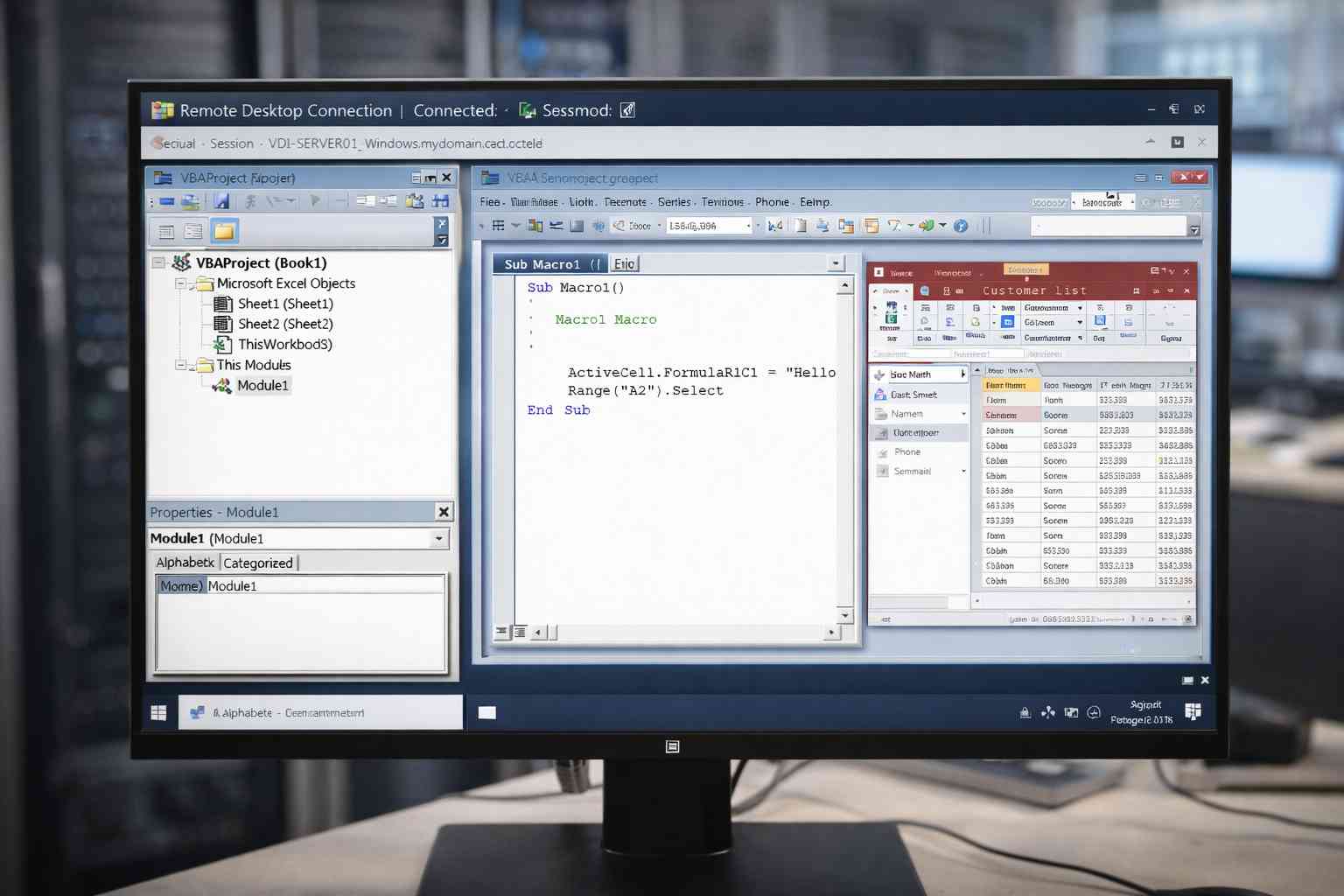
Organizations still running business-critical VB6 applications or Jet-based back-ends are feeling the pressure of rapid technological change. Users expect secure cloud access, real-time performance, and modern interfaces—yet Jet, DAO, and VB6 struggle to keep pace.
As technical debt grows, the question is no longer if modernization is necessary. The real decision is how to begin modernizing Visual Basic + Jet deployments without disrupting business operations.
The good news: modernization doesn’t have to be risky or chaotic. With the right approach, the right tools, and expert support, organizations can modernize Visual Basic + Jet deployments while preserving business logic and improving performance, scalability, and security.
This roadmap explains how teams:
- Move from VB6 to VB.NET
- Transition Access and Jet to SQL-based platforms
- Replace DAO with ADO.NET
- Execute a structured, low-risk migration from Jet
Table of Contents
Why Modernizing Visual Basic + Jet Deployments Is Mission-Critical
Legacy VB6 and Jet-based applications once served organizations well, but modern environments demand capabilities Jet was never designed to support. Organizations continuing to rely on Jet commonly face:
- File-size limitations that restrict growth
- Concurrency conflicts under multi-user access
- Security gaps without modern encryption standards
- Network instability caused by file-based architecture
- OS compatibility issues as Windows evolves
Modernizing Visual Basic + Jet deployments is now essential for operational stability—not just technical improvement.

Once modernized, organizations gain access to:
- Cloud-ready SQL Server or Azure SQL engines
- Role-based access and modern identity integration
- Transactional consistency
- High availability and failover options
- Compatibility with CI/CD and DevOps pipelines
- A flexible foundation for future enhancements
Modernization represents a long-term strategic shift, not a simple technology refresh.
Choosing Your Path: What Replaces Jet Back-Ends?
During planning, one question surfaces early: What replaces Jet back-ends? The answer depends on scale, architecture, and business goals.
SQL Server or SQL Server Express
Often the most natural successor to Jet. These platforms provide:
- Strong concurrency handling
- High data integrity
- Advanced indexing
- Encrypted connections
- Transaction-level reliability
For most teams modernizing Visual Basic + Jet deployments, SQL Server or SQL Server Express becomes the primary destination.
Azure SQL and Other Cloud Databases
Best suited for organizations moving toward remote access or SaaS delivery. Benefits include:
- Automated backups and services
- Global availability
- Elastic scaling
- Reduced infrastructure maintenance
Hybrid Migration Approaches
Some organizations modernize gradually:
- VB.NET first, Jet later
- Or SQL Server first, VB.NET later
At the application level, VB.NET offers a natural transition for VB6 development teams. For data access, migrating from DAO to ADO.NET improves security, concurrency, and efficiency.
How to Begin Modernizing Visual Basic + Jet Deployments
If you’re asking, “How do I upgrade my VB and Access app?”, successful modernization typically follows a proven sequence.
Assessment & Discovery
Before modernization begins, teams document:
- All Jet file locations and dependencies
- VB6 forms, modules, classes, and controls
- External integrations and APIs
- Business-critical logic
- Concurrency, performance, and scalability requirements
This assessment becomes the blueprint for modernization and prevents costly surprises.
Designing the Target Architecture
With the legacy footprint defined, the modern architecture is designed:
- VB6 → VB.NET
- Jet tables → SQL Server or SQL Server Express
- Jet queries → SQL views or stored procedures
- DAO → ADO.NET
- On-prem authentication → Azure AD or hybrid identity
- Local storage → Cloud or hybrid databases
This phase aligns technical decisions with business priorities.
Step-by-Step Migration from Jet
Modernizing Visual Basic + Jet deployments works best with a structured, methodical approach.
Step 1: Jet Schema Conversion
- Tables, indexes, relationships, and constraints recreated in SQL Server
- Jet queries re-engineered as views or stored procedures
Step 2: Data Migration & Verification
- Data exported from Jet
- Transformed and cleaned
- Validated and imported into SQL Server
Step 3: DAO to ADO.NET Transition
This transition enables:
- Secure connectivity
- Concurrency management
- Transaction support
- Connection pooling
Step 4: VB6 to VB.NET Modernization
Depending on complexity, this may include:
- Syntax updates
- Interface rebuilds
- Logic refactoring
- Framework adoption
- Code restructuring for maintainability
Step 5: Quality Assurance & Testing
Testing typically includes:
- Functional validation
- Load and concurrency testing
- Data accuracy checks
- User acceptance testing
Step 6: Deployment & Optimization
Post-deployment improvements often include:
- CI/CD pipelines
- Monitoring and logging
- Performance tuning
- High availability configurations
This sequence significantly reduces risk during modernization.
Common Questions About Modernizing Visual Basic + Jet Deployments
How do I upgrade my VB and Access app?
By migrating VB6 to VB.NET, moving Jet data to SQL Server, replacing DAO with ADO.NET, and deploying a modern architecture, ideally with expert guidance.
What replaces Jet back-ends?
SQL Server, SQL Server Express, Azure SQL, or other enterprise-grade relational databases.
Why Work With Experts in VB Modernization Consulting?

- Application refactoring
- Database restructuring
- Architecture redesign
- Cloud readiness planning
- Data integrity safeguards
- Risk mitigation
- Jet to SQL migration services
- VB6 to VB.NET modernization
- Secure hosting for legacy applications
- End-to-end modernization project management
When Your Organization Should Consider a Jet to SQL Migration
Modernization becomes necessary when:
- Applications fail under multi-user load
- Jet cannot meet security or compliance requirements
- Modern identity management is required
- Remote access is mandatory
- Downtime or data loss is unacceptable
- The VB6 codebase limits growth
Modernizing Visual Basic + Jet deployments unlocks scalability, performance, and long-term resilience. Whether your goal is upgrading VB6 to .NET, transitioning Access to SQL, or preparing for cloud deployment, the right partner can make the process stable and predictable.
If you’re ready to modernize with confidence, explore Wizmo’s expert migration services.